Who invented poutine? Nobody can prove it beyond doubt, but the sources agree on the essentials: poutine was born in rural snack bars in Québec's Centre-du-Québec region in the late 1950s. Two stories lead the pack: Fernand Lachance in Warwick (1957) and Jean-Paul Roy in Drummondville (“patate-sauce” from 1958, “fromage-patate-sauce” on the menu in 1964). Princeville has its own version too.
Hungry while you read? Casse-croûte Pierrot in Limoilou delivers until 4 a.m.: order online or call 418-529-4273.
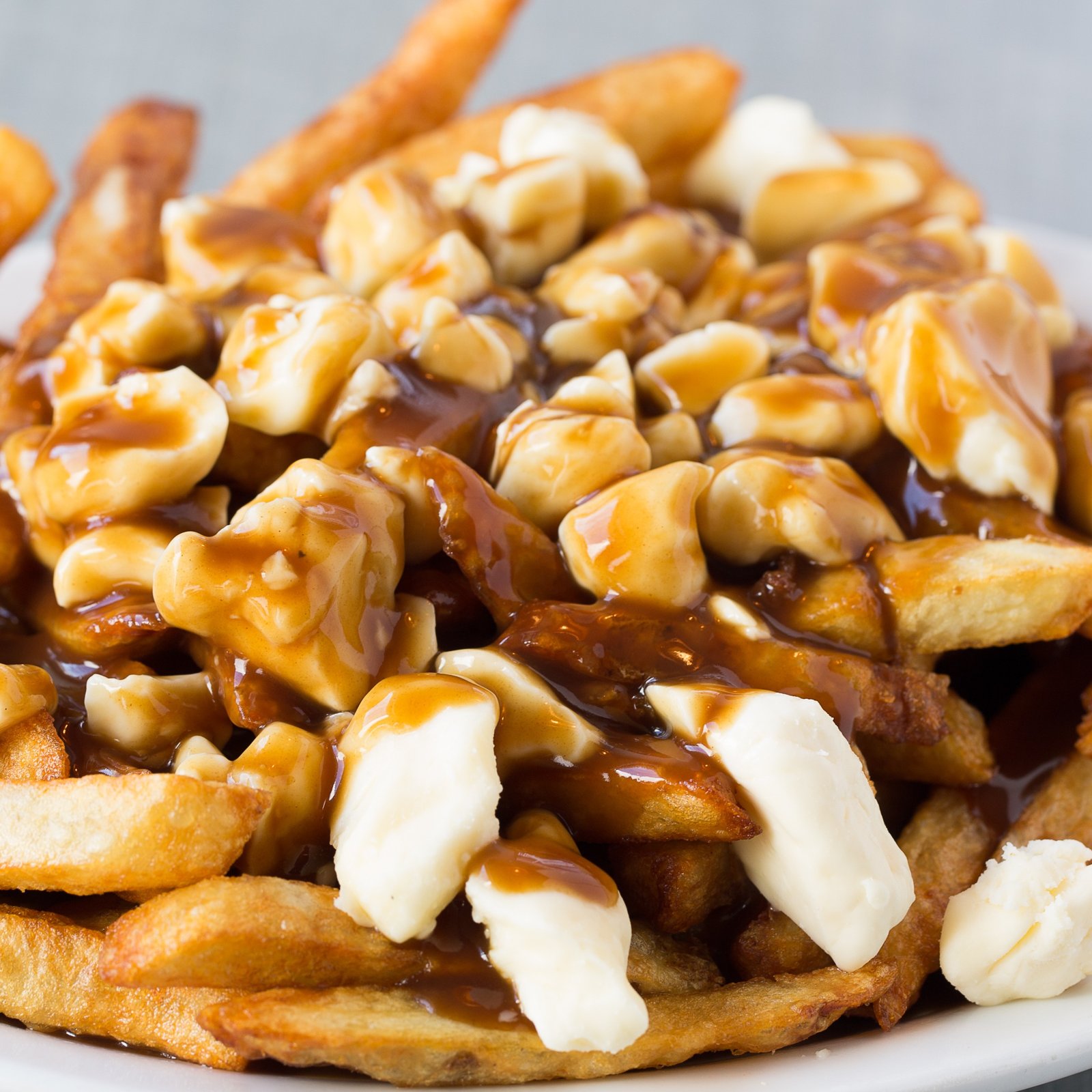
The claimants at a glance
| Town | Restaurant | The local version |
|---|---|---|
| Warwick | Café Idéal (Le Lutin qui rit), Fernand Lachance | 1957: cheese curds in the fries; gravy in the early 1960s |
| Drummondville | Le Roy Jucep, Jean-Paul Roy | 1958: patate-sauce (fries and gravy); 1964: fromage-patate-sauce |
| Princeville | La Petite Vache (1966) | The “50-50,” then the “mixte” with gravy |
Warwick, 1957: “une maudite poutine”
According to The Canadian Encyclopedia, Fernand Lachance of Café Idéal in Warwick, near Victoriaville, said he first added cheese curds to fries in 1957, at the request of a regular, Eddy Lainesse. His reply stuck: « Ça va te faire une maudite poutine! » (“That will make a damned mess!”). It was served in a paper bag. In 1963 he switched to plates; when customers complained the fries got cold too fast, he poured hot gravy over them. Other accounts put the gravy in 1962.
Drummondville, 1958–1964: Jean-Paul Roy's patate-sauce
Jean-Paul Roy said he invented poutine in 1964 at his drive-in restaurant, Le Roy Jucep. Since 1958 he had been serving fries in a special sauce, a dish he called “patate-sauce.” When he saw customers adding the cheese curds he sold in bags at the counter, he put “fromage-patate-sauce” on the menu. According to the restaurant, that order was too long to write down, hence the shortcut “poutine,” helped along by a joke about a cook nicknamed “Ti-Pout.” In 1998, Le Roy Jucep registered the trademark « L'inventeur de la Poutine » (the inventor of poutine).
In Warwick, the gravy came last; in Drummondville, the cheese did.
Princeville, and the version that reconciles them
At La Petite Vache in Princeville, opened in 1966, a customer mixed curds from the cheese factory next door into his fries: the “50-50,” which became the “mixte” once gravy was added. Tourisme Centre-du-Québec blends the two main stories: fries and cheese at the Lachance family's in Warwick, gravy thanks to Jean-Paul Roy. For food researcher Sylvain Charlebois, Warwick is the birthplace, but Le Roy Jucep was the first to sell all three ingredients together. What nobody disputes is the region, where nearby cheese factories played a key role.
Where does the word “poutine” come from?
- From “pouding” (English pudding), a mixture of foods, often messy: the most common explanation. In Québec slang, a poutine is also a mess.
- From dialects of France: for the Office québécois de la langue française, an English origin is not confirmed; the Dictionnaire historique du français québécois (Université Laval) points to regional dialects of France, kept alive by the nearby English word pudding.
- A dozen other theories, such as French potin (pâté) or poutitè (potato stew).
Not to be confused with poutine râpée, an Acadian dish.
From country snack bar to Québec icon
Poutine reached Québec City in 1969, at the Ashton Snack Bar, a food truck on boulevard Hamel, then Montréal in 1983. Restaurant chains picked it up from 1985 on; McDonald's added it to its Québec menus in 1990. In the early 2000s, Montréal chef Martin Picard of Au Pied de Cochon took it upscale with his foie gras poutine.
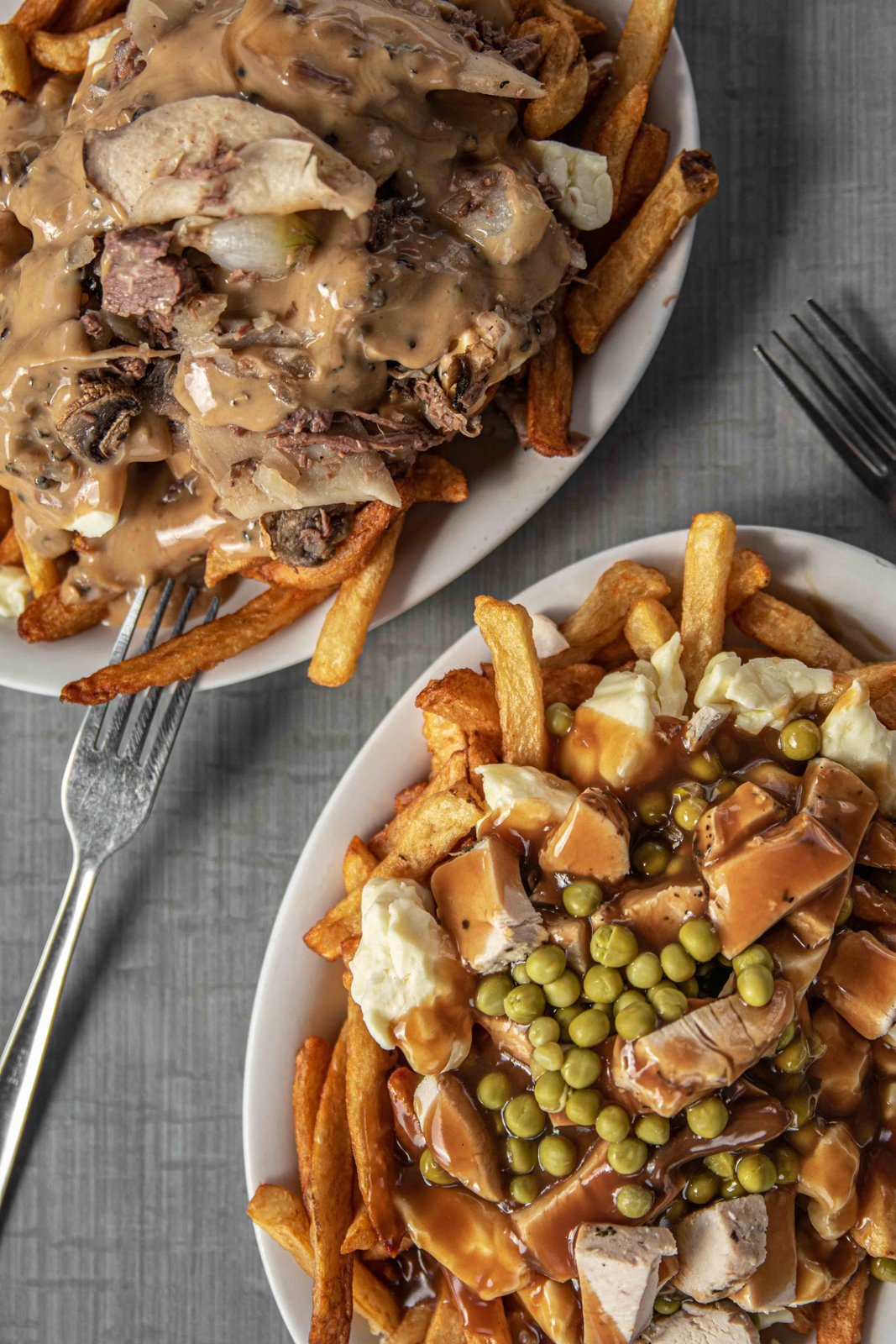
It branched out too: Italian, veggie and galvaude, with chicken and green peas, associated with the Gaspésie (see our types of poutine). The word entered Merriam-Webster in 2014, poutine was served at a White House state dinner in 2016, and Google gave it a doodle on May 19, 2023.
Québec dish or Canadian dish?
The exact spot is disputed, but the birthplace isn't: Québec. Elsewhere in Canada it's often presented as a Canadian dish, a label that doesn't go over well here. Researcher Nicolas Fabien-Ouellet's paper “Poutine Dynamics” (CuiZine, 2016), which describes this “Canadianization” as the appropriation of a Québécois dish, reignited the debate in 2017.
Frequently asked questions
Who invented poutine?
Nobody knows for certain. Fernand Lachance (Warwick, 1957) and Jean-Paul Roy (Drummondville, 1964) are the two most cited claimants.
When was poutine invented?
In the late 1950s: 1957 in Warwick, between 1958 and 1964 in Drummondville.
Where is poutine from?
From Centre-du-Québec, a cheese-making region of Québec, around Warwick, Drummondville and Princeville.
Sources
- “Poutine,” The Canadian Encyclopedia (2014, last edited 2023)
- “Poutine,” Grand dictionnaire terminologique, Office québécois de la langue française (in French)
- “Poutine,” Wikipedia and “Poutine (plat),” Wikipédia (in French)
- “Historique,” Le Roy Jucep, Drummondville (in French)
- “L'origine de la poutine,” Tourisme Centre-du-Québec (in French)
Poutine in Limoilou today
At Casse-croûte Pierrot, in Limoilou since 1972, poutine comes in about fifteen versions (prices before taxes):
- Brown gravy poutine: $9.15 (mini), $12.60 (small), $18.40 (large)
- Galvaude poutine: $12.60, $16.45, $23.75
- Poutine 1996 (braised meat, mushrooms, onions, pepper sauce), named after our civic number: $15.50, $19.70, $26.80
All our poutines are on our Poutine in Québec City page, and the rest is on the snack bar menu. For delivery, see the areas served and fees.
Poutine, right now?
Dining room until 2 a.m.; takeout counter and delivery until 4 a.m., 7 days a week.